Audit-Ready Reports
Maintain meticulous records for IRS REP tracking with automated evidence collection and detailed activity logs.
Learn more →
You're a W-2 earner pulling in $250,000 a year. You bought a short-term rental in 2024, spent your weekends managing bookings, coordinating cleaners, and answering guest messages at midnight. At tax time, your CPA delivers the bad news: the $38,000 in rental losses can't touch your salary. They're "passive." Trapped. Useless.
This scenario plays out constantly — and it doesn't have to.
Here's the honest version of what's often called the short-term rental tax loophole: there is a legal, IRS-sanctioned strategy that lets high-income W-2 earners use rental losses to offset active income. It combines three specific tax provisions — real estate professional status (REPS), material participation, and cost segregation paired with bonus depreciation. Miss any one piece, and the whole strategy collapses.
This guide walks through each element with the actual code sections, the documentation standards the IRS and tax courts demand, and a practical implementation plan for 2026. No hype, no clickbait. Just the rules as written.
The passive activity loss rules under IRC §469 are the wall that keeps most rental losses from offsetting W-2 income. Congress built that wall in 1986 to stop wealthy taxpayers from funding passive hobbies with active salary. Rental activities are treated as per se passive — meaning the IRS presumes you're a passive investor, regardless of how much sweat equity you put in.
Two exceptions crack the wall open.
First, real estate professional status. Under IRC §469(c)(7), a taxpayer who qualifies as a REPS can treat rental losses as non-passive — meaning they flow through and offset salary, business income, capital gains, anything. Second, the short-term rental trade-or-business rule: when a property has an average guest stay of 7 days or less, it's treated as a trade or business rather than a passive rental activity. This bypasses the per se passive presumption entirely, allowing you to qualify under the general material participation tests. (If your average stay runs 8–30 days, you can still qualify if you provide significant personal services — think daily housekeeping or concierge work.)
The "loophole" is the combination: REPS for the classification, material participation for the hours, and cost segregation for the deduction size. W-2 earners who actively manage short-term rentals can satisfy all three — and unlock five- and six-figure deductions against their salaries.
One critical update for 2026: 100% bonus depreciation was permanently restored for property acquired and placed in service after January 19, 2025. The phase-down scheduled under prior law has been reversed. For investors placing new properties in service this year, that means qualified improvements and personal property can be fully expensed in year one.
Qualifying as a real estate professional is the single most powerful status a W-2 earner can hold — and the most misunderstood.
Under IRC §469(c)(7)(A), you must pass two tests:
Test 1: More than 750 hours of service during the tax year in real property trades or businesses in which you materially participate.
Test 2: More than 50% of your total personal services must be performed in those real property trades or businesses.
Real property trades include rental real estate, development, construction, acquisition, conversion, operation, management, leasing, and brokerage. If you're a W-2 doctor or engineer, your medical or engineering hours count against you in the 50% test — they're the denominator. That's why the strategy demands real time, not token effort.
Married filing jointly? The math gets easier. Under IRC §469(c)(7)(B) and IRS Publication 925, spouses can combine their real estate hours to satisfy the 750-hour threshold. The catch: each spouse must independently meet the material participation tests for their respective activities. The surgeon's hours can't be used to help the managing spouse qualify for material participation.
In practice, this looks like a family where one spouse works a demanding medical or tech career while the other manages the couple's four STRs for 800 hours a year. The 800 hours covers the 750 threshold, and as long as the managing spouse hits material participation in the grouped activity, the losses become active.
Here's the other essential move. Under Treas. Reg. 1.469-9(g), you can elect to treat all rental real estate activities as a single activity. Instead of proving material participation in each individual property, you aggregate them. This election must be filed by the due date of your return (including extensions), and once made, it's binding for all future years unless circumstances materially change.
A quick comparison of the two standards investors constantly confuse:
| Standard | Hours Required | 50% Test | What It Unlocks |
|---|---|---|---|
| Material participation (Test 1) | 500+ hours per activity | No | Losses become non-passive for that activity |
| REPS | 750+ hours across all real estate activities | Yes — more than half of total service | All rental losses can offset W-2 income |
The tax team at WCG Inc. puts it plainly: "Do not confuse the active or material participation rules above with the 750 hours required for Real Estate Professionals. The 750 hour rule is way more liberal." Material participation applies per activity; REPS aggregates everything.
REPS gets you the classification. Material participation gets you the deduction. You need both.
The IRS's passive activity loss rules lay out seven tests under Temp. Reg. 1.469-5T(a). Meet any one of them, and you materially participate:
For STR investors, Tests 1, 2, and 3 are the workhorses. Test 1 is straightforward: log 500+ hours across your properties. Test 2 applies when you self-manage everything with no property manager. Test 3 is the trap — you can hire help, but if your property manager puts in more hours than you, you fail. The regulation is explicit that no other person may perform more services than the taxpayer. We've seen investors with 130 logged hours lose the deduction because their property manager clocked 200.
Here's a real-world example. A W-2 engineer in Austin owns a short-term rental in Colorado. She spends 25 weekends a year at the property, plus handles all bookings, vendor scheduling, and bookkeeping remotely — roughly 520 hours annually. She qualifies under Test 1 for that property. Add REPS status, and her rental losses offset her engineering salary.
This is where the strategy goes from "saves a few thousand" to "saves six figures."
Without cost segregation, a $1 million property generates roughly $40,000–$60,000 in annual depreciation under the 27.5-year residential schedule. That helps, but it's not life-changing. A cost segregation study reclassifies building components — plumbing, electrical, flooring, appliances, landscaping, land improvements — from 27.5-year property into 5-, 7-, or 15-year classes. On a $1 million property, $200,000–$400,000 of basis typically gets reclassified into short-lived assets eligible for immediate expensing.
Run the numbers: a $1M property with an $800K building basis and $300K reclassified to 5-year property produces $300K in bonus depreciation in year one at the 100% rate. At a combined 32% federal and state rate, that's $96,000 in tax savings. Without REPS, those losses stay passive and trapped. With REPS, they flow straight onto your return.
The before-and-after picture for a W-2 earner in the 24–37% bracket:
| Scenario | Year-One Deduction | Tax Savings (32% combined rate) |
|---|---|---|
| Standard depreciation, no REPS | ~$40K (trapped as passive) | $0 against W-2 income |
| Cost segregation + REPS | $200K–$400K (non-passive) | $64K–$128K |
The key insight: cost segregation without REPS is wasted effort for W-2 earners. The strategy only works when the pieces combine.
Here's the uncomfortable truth: the IRS knows about this strategy. The audit techniques guide for real estate runs hundreds of pages, and revenue agents are specifically trained to scrutinize REPS claims. The first thing they ask for is your time log.
The burden is on you. In Moss v. Commissioner (TC Memo 2003-226), the Tax Court rejected reconstructed records created after the audit notice arrived. In Hill v. Commissioner and Penley v. Commissioner, the court demanded credible, contemporaneous evidence — records created at or near the time the work was performed. Estimates, round numbers, and year-end reconstructions fail.
The practical standard: your log should capture the date, hours, type of activity, property involved, and nature of the work. REPSShield's platform data — covering 440 users, 729 properties, and 35,916 logged hours — shows the activities that qualify most often:
The through-line: management, coordination, and oversight all count. Passive "checking your bank account" does not.
Digital tracking tools produce the strongest evidence because they create timestamped, immutable records. The platform's entry-source breakdown shows how investors capture hours: manual entry (51.3%), Gmail integration (24.3%), calendar imports (9.5%), and other automated sources. Geofencing — which logs time automatically when you arrive at a property — remains underused at 0.2% of entries, but it's the closest thing to indisputable proof that you were physically there.
A sample weekly log entry looks like this:
| Date | Activity | Property | Hours | Notes |
|---|---|---|---|---|
| 6/3 | Vendor coordination | 123 Birch St | 1.5 | HVAC repair quotes, interviewed 2 contractors |
| 6/4 | Guest communication | 123 Birch St | 0.75 | Resolved early check-in request |
| 6/5 | Financial record-keeping | All | 1.25 | Reconciled October statements |
The tax court has shown no patience for sloppy REPS claims. Here are the mistakes that get investors in trouble:
Round numbers. "I worked 750 hours" is a red flag. Auditors expect variance — real work logs show 7.25 hours, 3.5 hours, 1.75 hours, not 50 hours every single week.
Confusing material participation with REPS. The 500-hour test is not the same as the 750-hour requirement. Both are required, and they serve different purposes.
Missing the grouping election deadline. This election must be filed with your return by the due date. Miss it, and you're stuck proving material participation property by property.
The "no other person" rule. If your property manager logs more hours than you, Test 3 fails. Period.
Not tracking in real-time. The REPSShield data shows that 761 of 12,639 material participation entries — roughly 6% — were classified as "qualified non-material." That's users who logged hours thinking they qualified when the activity type didn't count. If people using a dedicated tracking tool get it wrong 6% of the time, you will too without a structured approach.
Other audit triggers: high REPS hours relative to property count, first-year bonus depreciation claims with thin rental income, and year after year of rental losses against W-2 wages without a property management trail to back it up.
Step 1: Assess your situation. Total your real estate hours from last year. If you're under 500, you need to either ramp up your involvement or bring in a spouse who can aggregate hours with you.
Step 2: Structure your ownership. Make sure your properties sit in an entity that allows losses to flow through — an LLC taxed as a sole proprietorship or partnership works for most investors. Confirm with your CPA.
Step 3: Set up time tracking now. Start logging hours in real time before year-end. REPSShield's time tracking features automate much of the process: Gmail integration captures emails to vendors and guests, calendar imports log meetings automatically, and manual entry covers everything else.
Step 4: Order a cost segregation study. For properties acquired or placed in service after January 19, 2025, the restored 100% bonus depreciation makes this step urgent. Expect $200K–$400K in reclassified basis per $1M of property value.
Step 5: File the grouping election. By the due date of your return, elect to treat all rental activities as a single activity. Your CPA files this with the return.
Step 6: Document everything. Retain receipts, contracts, emails, and your time log. The IRS audit guide is public — read the REPS sections so you know what examiners will look for.
A quick decision framework: if you can realistically hit 750+ real estate hours this year, pursue the full REPS path. If not, consider whether spousal aggregation gets you there. If neither works, the STR strategy won't deliver W-2 offsets — but you can still bank the passive losses for future years when you do qualify.
What is the short-term rental tax loophole for W-2 earners? It's the combination of REPS status, material participation, and cost segregation that allows rental losses to offset W-2 wages. Without all three pieces, losses remain passive and trapped.
How many hours do I need to qualify for REPS? More than 750 hours in real property trades or businesses where you materially participate, plus more than 50% of your total personal services in those activities. Married couples filing jointly can combine their hours.
Can my spouse and I combine our hours? Yes for the 750-hour test, but each spouse must independently satisfy material participation for their own activities, per IRS Pub 925 and Rev. Rul. 2010-13.
What's the difference between material participation and REPS? Material participation is per-activity — the 500-hour test. REPS is a status across all your real estate activities — 750 hours plus the 50% test. You need both to unlock the strategy.
Do I need a property manager? No, but be careful. If your manager logs more hours than you, you fail Test 3. Many investors use property managers and still track their own oversight, bookkeeping, and coordination hours.
What happens if I get audited without time logs? You'll likely lose. Courts require credible, contemporaneous evidence. Reconstructed records fail under Moss v. Commissioner.
Can I use this strategy with a long-term rental? Yes, with REPS. Long-term rentals are presumptively passive, so REPS is mandatory. Short-term rentals make qualification easier because they're treated as trades or businesses.
Is the STR tax loophole legal? Yes, when properly structured and documented. It's grounded in IRC §469(c)(7) and Temp. Reg. 1.469-5T. The IRS scrutinizes it heavily, which is why documentation is everything.
What's the bonus depreciation rule for 2026? 100% bonus depreciation applies to property acquired and placed in service after January 19, 2025 — the full allowance was permanently restored.
The STR strategy for W-2 earners comes down to three pieces: qualify as a real estate professional with 750+ hours and the 50% test, meet material participation through the 500-hour or 100-hour tests, and amplify the deductions with cost segregation and bonus depreciation.
Five things to remember: REPS and material participation are separate requirements; the grouping election must be filed on time; spousal aggregation only works when each spouse independently participates; cost segregation creates the losses at scale; and contemporaneous documentation is the difference between winning and losing in audit.
With 100% bonus depreciation restored for 2026, this is the most favorable environment for this strategy in years. The opportunity cost of inaction is real — every year you don't qualify is a year of trapped losses you'll never use. Start tracking your hours today. REPSShield's free trial gives you the contemporaneous evidence the IRS demands, and your future self at tax time will thank you.
Download the REPSShield mobile app to log your real estate hours anytime, anywhere:
Stay compliant with contemporaneous time tracking, even when you're away from your desk. Every hour you capture on the go is an hour that counts toward your REPS qualification.
Maintain meticulous records for IRS REP tracking with automated evidence collection and detailed activity logs.
Learn more →Track progress toward REP qualification with visual indicators, milestone tracking, and automated compliance monitoring.
Learn more →Manage and track time across multiple rental properties with detailed property-specific reporting and analytics.
Learn more →Easily track hours for both long-term and short-term rentals with compliance tools and activity logging.
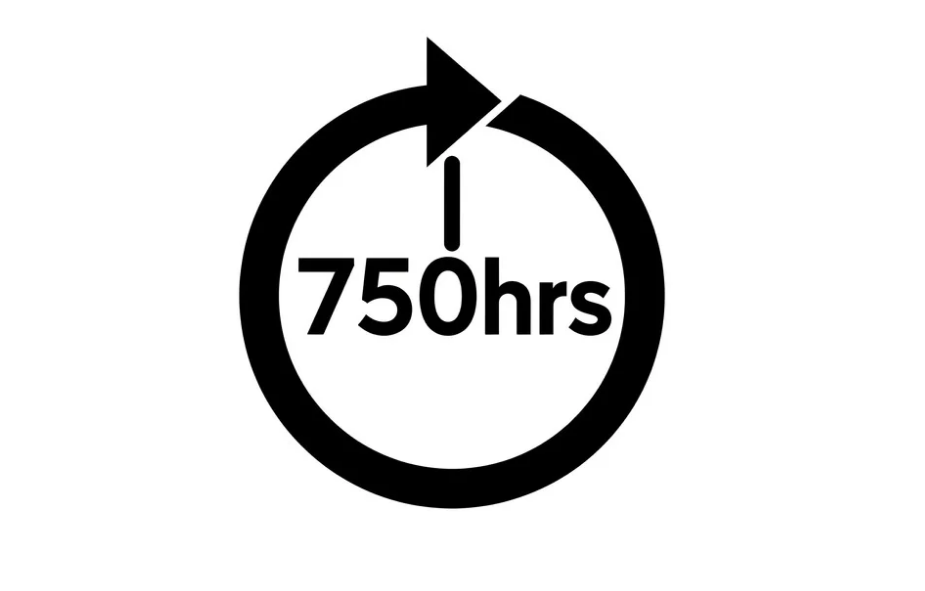
Track REPS hours for long-term rental properties with our advanced IRS compliance tools. Our platform provides a robust, audit-ready system for detailed activity logging, allowing you to monitor and document every minute spent on your business. Easily prove your material participation toward the crucial 750-hour annual requirement with segmented time entries for property management, financial recordkeeping, and maintenance oversight, protecting your ability to convert passive rental losses into active income.
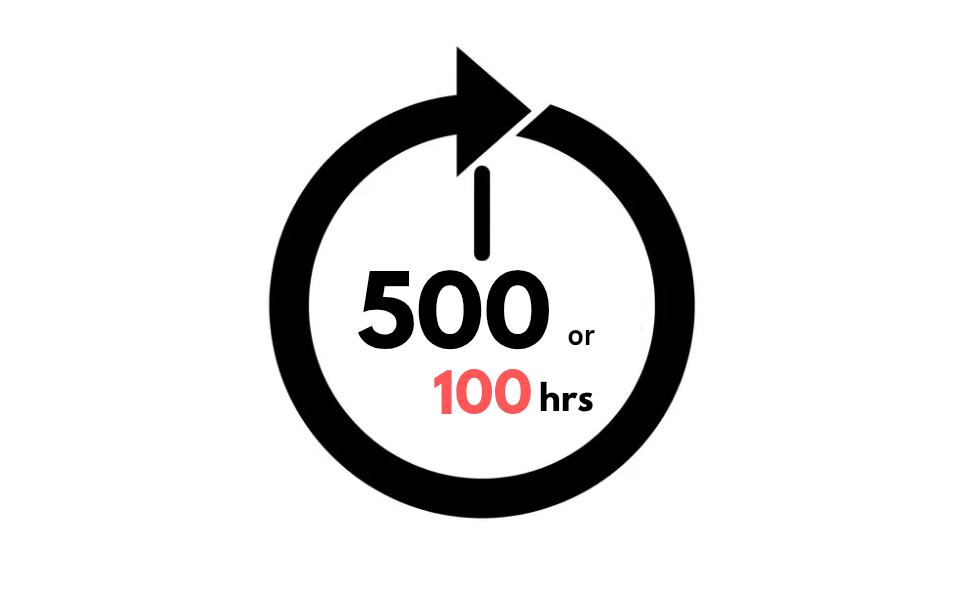
Comprehensive IRS tracking for short-term rentals. By achieving material participation status—meeting the 100-hour test or the 500-hour standard—you can unlock the STR tax loophole to convert passive rental losses into active losses that offset W-2 or active income. Easily monitor your hours and ensure your property adheres to the crucial 7-day average stay rule with detailed time logging, so you stay audit-ready and protect this key tax saving strategy.
Powerful resources to simplify investing and stay compliant.
Comprehensive rental property investment analysis with 30-year projections, break-even analysis, and ROI calculations.
Analyze Buy, Rehab, Rent, Refinance deals with cash recovery and post-refinance ROI analysis.
Determine if you qualify for Real Estate Professional status using official IRS guidelines.
Upload your REP hour tracking file and get an audit readiness score with AI-enhanced suggestions.
Generate a custom IRS-compliant hours tracking template in Excel, Google Sheets, or Notion.
Track multi-property 1031 exchanges with compliance checking and interactive timelines.
Everything you need to know about tracking your Real Estate Professional status
Built for real estate professionals
Join thousands of real estate professionals who track hours effortlessly, stay audit-ready, and protect their REP status with confidence.