Audit-Ready Reports
Maintain meticulous records for IRS REP tracking with automated evidence collection and detailed activity logs.
Learn more →What if you could rent out your home for up to 14 days and never pay tax on the income? Not defer the tax. Not offset it with deductions. Never pay it, period.
That's the promise of IRC Section 280A(g), better known as the Augusta Rule. The nickname traces back to the Masters Tournament in Augusta, Georgia, where homeowners realized they could rent their houses to golf fans for tournament week and pocket the proceeds without the IRS taking a cut. Congress eventually codified the practice into a statutory safe harbor: if you rent out your home for fewer than 15 days, the income is completely excluded from gross income.
For real estate investors, this obscure provision is more than a trivia question. It's a legitimate, repeatable strategy for generating tax-free cash flow — whether you're renting out your primary residence during a major event, leveraging a second home, or structuring an S corporation rental for a legitimate business meeting.
The story starts in Augusta, where homeowners discovered they could make more money renting their homes to Masters attendees for a single week than many people earn in a month. The IRS, rather than fighting the practice, created a safe harbor. Under IRC Section 280A(g), if a dwelling unit is used as a residence and rented out for fewer than 15 days during the tax year, the rental income is excluded from gross income entirely.
The rule is deceptively simple, but there's a critical trade-off: no rental expenses can be deducted for those days. You can't write off the cleaning fee, the marketing costs, or a portion of your utilities. The exclusion is all-or-nothing — you take the income tax-free, and you forfeit the deductions.
The IRS lays out the mechanics in Publication 527, which covers residential rental property. The 14-day exclusion counts rental days — rent the dwelling for 14 days or fewer and the income is excluded. But personal-use days matter too: they determine whether the property counts as a residence (personal use exceeding the greater of 14 days or 10% of rental days), and only a dwelling used as a residence qualifies for the exclusion.. So you can live in your home all year, rent it for 14 days, and pocket the rental income tax-free.
Let's translate the statutory language into plain English. The code says that if you use a dwelling unit as a residence and rent it out for fewer than 15 days, you don't have to include the rental income in your gross income. That's it. No material participation requirement, no hours tracking, no real estate professional election.
What counts as a "dwelling unit"? The IRS defines it broadly: a house, condo, apartment, or even an RV with sleeping quarters. If it has basic living accommodations — sleeping space, bathroom, cooking facilities — it qualifies. What counts as "used as a residence"? Under IRC Section 280A(d), you meet the test if you use the property personally for more than 14 days during the year, or more than 10% of the days it's rented, whichever is greater.
Here's a simple example. You rent out your home for 14 days at $500 per night. That's $7,000 of income — and it's completely tax-free. No Schedule E, no self-employment tax, no federal income tax.
But rent for 15 days, and the entire picture changes. All rental income becomes taxable, and you must report expenses under the normal vacation home rules. The 15th day doesn't just make that one day taxable — it makes every rental day taxable. That's the trap that catches careless investors.
The exclusion is automatic in the sense that you don't need to file an election to claim it. But you do need to report it correctly on your tax return, typically by showing the rental days and the excluded income in your records. Your tax software won't know about it unless you tell your preparer.
This strategy isn't limited to homeowners in Georgia. It applies to anyone who owns a dwelling unit that qualifies as a personal residence. That includes:
The key limitation: the property must be a personal residence, not a pure rental property. If you own a rental property that you never use personally, the exclusion doesn't apply. The property must satisfy the personal use test under IRC Section 280A(d) — meaning you use it personally for more than 14 days or more than 10% of the rental days, whichever is greater.
There's no lifetime limit. You can use the Augusta Rule every single year, as long as you stay under the 15-day threshold and continue to meet the residence requirement.
Here's where the strategy gets interesting. Real estate investors can deploy the 14-day rule in several ways.
Strategy 1: Rent out your primary residence during major events. The Masters, the F1 Grand Prix in Austin, the Super Bowl, Taylor Swift concerts — any event that drives hotel prices to absurd levels. If your home is in a desirable location, you can charge premium rates for 14 days and pocket the income tax-free.
Strategy 2: Rent out a second home you use personally. If you own a vacation property and use it for personal trips, you can rent it out for up to 14 days per year without triggering any tax liability. The rental income is excluded, and your personal use days remain unaffected.
Strategy 3: S corporation owners rent their home to their S corp. This is a popular move among business owners. Your S corp pays you fair market value rent to hold a board meeting, strategy session, or team retreat at your home. The rent is tax-free to you personally, and the S corp gets a business expense deduction. But the business purpose must be real, not a sham. Some tax attorneys advise against using the Augusta Rule with an S corp rental unless the business purpose is airtight — and that caution is warranted. The IRS specifically looks for fake board meetings designed to funnel tax-free money to owners.
Strategy 4: Don't combine with home office deductions. The Augusta Rule is separate from the home office deduction. You cannot claim home office deductions for the same days you're excluding rental income under Section 280A(g). The two strategies operate independently.
The common thread across all four strategies is fair rental value. The IRS can recharacterize below-market rent as a gift (if rented to family) or a dividend (if rented to your own corporation). You need to charge what an unrelated third party would pay for the same property in the same market.
The short-term rental loophole gets a lot of attention in real estate investing circles, and it's often confused with the Augusta Rule. They are fundamentally different strategies.
The STR loophole relies on IRC Section 469(j)(10), which treats certain short-term rentals as non-passive activities. To qualify, you need an average rental period of 7 days or fewer AND material participation in the rental activity. If you meet both tests, rental losses can offset your active income — a powerful deduction play. The IRS passive activity loss rules explain the framework in detail.
The Augusta Rule, by contrast, requires no material participation and no minimum hours. It simply excludes rental income entirely, but allows no deductions.
| Feature | Augusta Rule (280A(g)) | STR Loophole (469(j)(10)) |
|---|---|---|
| Rental days | 14 days or fewer | No day limit, but average stay ≤ 7 days |
| Material participation | Not required | Required |
| Income treatment | Excluded from gross income | Taxable, but losses can offset active income |
| Deductions | None for rental days | Full rental expenses deductible |
| Best for | Tax-free cash flow | Generating paper losses |
Which should you use? It depends on your goals. If you want tax-free income from a personal residence, the Augusta Rule is the clear choice. If you want to generate losses from a dedicated rental property, the STR loophole is the play. And here's the thing: the Augusta Rule isn't a loophole at all. It's a statutory exclusion written directly into the tax code. The STR strategy is a classification play; the Augusta Rule is a straight-up exemption.
Real estate professional status is another strategy that gets tangled up with the Augusta Rule, but they serve completely different purposes.
REPS under IRC Section 469(c)(7) is about making rental losses non-passive so they can offset W-2 income. To qualify, you need more than 750 hours of service in real property trades or businesses and material participation. It's a heavy documentation burden — the kind of thing that requires contemporaneous time tracking to survive an audit. The 439 investors currently tracking their real estate activities with REPSShield log an average of 1.81 hours per entry, a reminder that consistent, granular documentation is the foundation of any audit-defensible strategy.
The Augusta Rule is about excluding rental income from tax entirely. It requires no hours, no material participation, and no REPS election. A property rented for 14 days or fewer isn't even considered a rental activity for REPS purposes — it's simply a personal residence generating excluded income.
Can you use both? Yes, but on different properties. A real estate investor with REPS status can still use the Augusta Rule on their personal residence, while tracking hours on their actual rental properties for REPS qualification. The two strategies don't conflict — they complement each other.
The exclusion is simple to claim, but it's also easy to misreport. The IRS sees taxpayers claiming it without proper documentation, and that's when it becomes an audit issue.
The good news: the documentation requirements are straightforward. You need:
The critical word here is contemporaneous. The IRS and the courts prefer real-time logs over reconstructed records. In Moss v. Commissioner, the Tax Court emphasized that taxpayers need credible, contemporaneous evidence to substantiate their claims. Estimates, round numbers, and after-the-fact reconstructions are typically insufficient.
Remember: the burden of proof is on you, the taxpayer. If you can't show that you rented for 14 days or fewer, or that you charged fair market value, the IRS can recharacterize the entire arrangement. The IRS real estate audit techniques guide specifically flags rental arrangements with related parties and below-market rent as areas of concern. Across the 19,000+ time entries logged by REPSShield users, the most common activities — vendor coordination, tenant communication, and financial record-keeping — are exactly the kind of contemporaneous evidence the IRS expects to see.
Let me walk through the mistakes I see investors make most often.
Mistake 1: Renting for 15+ days and thinking the income is still tax-free. This is the most common error. The 15th day flips the entire treatment — all income becomes taxable, and you're now subject to the vacation home rules. There's no grace period and no rounding down. A few years back, a taxpayer tried to argue that 16 days of renting was "basically 14" because two of those days were partial days. The Tax Court didn't buy it, and neither will the IRS.
Mistake 2: Charging below fair market value to a related entity. If you rent your home to your S corp for $200 per night when comparable homes rent for $800, the IRS can recharacterize the difference as a dividend or compensation. The rent must be defensible.
Mistake 3: Using the Augusta Rule on a property that isn't a personal residence. A pure rental property that you never use personally doesn't qualify. The personal use test is a hard requirement.
Mistake 4: Claiming deductions for expenses on the 14 rental days. The exclusion and the deductions are mutually exclusive. You can't take the tax-free income and also write off the expenses.
Mistake 5: Confusing the Augusta Rule with the STR loophole or REPS. They're different strategies with different requirements. Mixing them up can lead to incorrect filings and unexpected tax liabilities.
Let's put the Augusta Rule into practice with three scenarios.
Example 1: The Masters rental. A homeowner in Augusta rents out their 3-bedroom house for 14 days during tournament week at $700 per night. That's $9,800 in rental income — completely tax-free. The homeowner documents the rental agreement, the Airbnb comparables for the week, and the bank deposits. No Schedule E, no tax liability.
Example 2: The S corp board meeting. A business owner rents their home to their S corp for a two-day strategic planning session. The S corp pays $2,500 per day, which is consistent with local executive retreat venues. The owner documents the meeting agenda, attendee list, and board resolution. The $5,000 is tax-free to the owner, and the S corp deducts the expense as a legitimate business cost.
Example 3: The vacation home. An investor owns a lake house they use for 30 personal days per year. They rent it out for 14 days during peak summer season at $400 per night, generating $5,600 in tax-free income. Because the property is used as a residence and rented for fewer than 15 days, the income is excluded. The mortgage interest and property taxes remain deductible as itemized deductions, subject to the usual limits.
In each case, the tax savings are significant. A high-income taxpayer in the 37% bracket would owe roughly $3,600 in federal tax on the Masters rental alone — plus self-employment tax if the activity were deemed a business. The Augusta Rule eliminates that liability entirely.
Can I use the Augusta Rule with Airbnb? Yes, if you rent your home for 14 days or fewer during the year and the property is a dwelling unit used as a residence. Airbnb income from those days is tax-free, but you cannot deduct any rental expenses for those days.
How many days can I rent without paying tax? You can rent for 14 days or fewer and exclude the income. If you rent for 15 days or more, all rental income is taxable and you must report expenses under the normal vacation home rules.
Does the Augusta Rule apply to second homes? Yes, as long as the second home is a dwelling unit used as a residence — meaning you use it personally for more than 14 days or 10% of the rental days, whichever is greater.
Can I deduct expenses if I use the Augusta Rule? No. If you exclude the rental income under IRC 280A(g), you cannot deduct any expenses attributable to those rental days. You can still deduct mortgage interest and property taxes as itemized deductions, subject to limits.
What is fair rental value and how do I determine it? Fair rental value is the price a willing tenant would pay for the same property in the same area. Use comparable rentals, local listings, or a professional appraisal. Charging below fair market value to a related party can trigger IRS recharacterization.
Can an S corporation rent my home for a board meeting? Yes, if the rental is for a legitimate business purpose and the rent is fair market value. The S corp must actually use the space for business, and you must document the meeting, attendees, and business purpose.
Is the Augusta Rule legal? Yes. It is a statutory exclusion under IRC Section 280A(g), created to help homeowners who rent their homes for special events like the Masters Tournament.
Does the Augusta Rule require material participation? No. Unlike the short-term rental loophole, the Augusta Rule does not require material participation, active participation, or any minimum hours.
Can I use the Augusta Rule every year? Yes, as long as you rent for 14 days or fewer each year and meet the residence requirements. There is no lifetime limit.
What happens if I rent for 15 days? If you rent for 15 days or more, the Augusta Rule no longer applies. All rental income must be reported, and you can deduct rental expenses, but you must allocate expenses between personal and rental use.
The Augusta Rule is one of the most underrated tools in real estate tax strategy. It's a statutory exclusion, not a gray-area loophole, and it can generate meaningful tax-free income year after year. Whether you're renting out your primary residence during a major event, leveraging a second home, or structuring an S corp rental, the math works in your favor.
But the 14-day limit is strict, and documentation is critical. Track your rental days, your personal use days, and your fair rental value comparables. If you're already tracking time for REPS or the STR loophole, the same discipline applies — and the same tools work. REPSShield's time tracking features help you log rental days, personal use days, and business purpose documentation in one place, so you're audit-ready when it matters.
The Augusta Rule won't make you rich on its own. But combined with a broader tax strategy — REPS, cost segregation, or the short-term rental loophole — it's another arrow in your quiver. Use it wisely, document it thoroughly, and keep that 15th day off the calendar.
Download the REPSShield mobile app to log your real estate hours anytime, anywhere:
Stay compliant with contemporaneous time tracking, even when you're away from your desk. Every hour you capture on the go is an hour that counts toward your REPS qualification.
This article is general information only and is not tax advice. Tax law is fact-specific — rules like the 750-hour test and material participation depend on your individual circumstances. Consult a qualified tax professional about your situation before making any decisions based on this information.
Maintain meticulous records for IRS REP tracking with automated evidence collection and detailed activity logs.
Learn more →Track progress toward REP qualification with visual indicators, milestone tracking, and automated compliance monitoring.
Learn more →Manage and track time across multiple rental properties with detailed property-specific reporting and analytics.
Learn more →Easily track hours for both long-term and short-term rentals with compliance tools and activity logging.
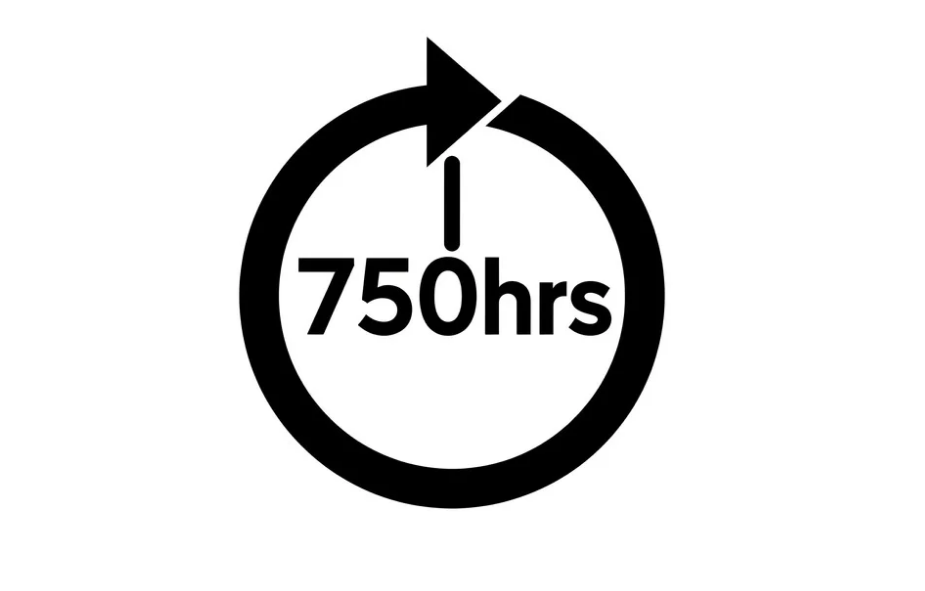
Track REPS hours for long-term rental properties with our advanced IRS compliance tools. Our platform provides a robust, audit-ready system for detailed activity logging, allowing you to monitor and document every minute spent on your business. Easily prove your material participation toward the crucial 750-hour annual requirement with segmented time entries for property management, financial recordkeeping, and maintenance oversight, protecting your ability to convert passive rental losses into active income.
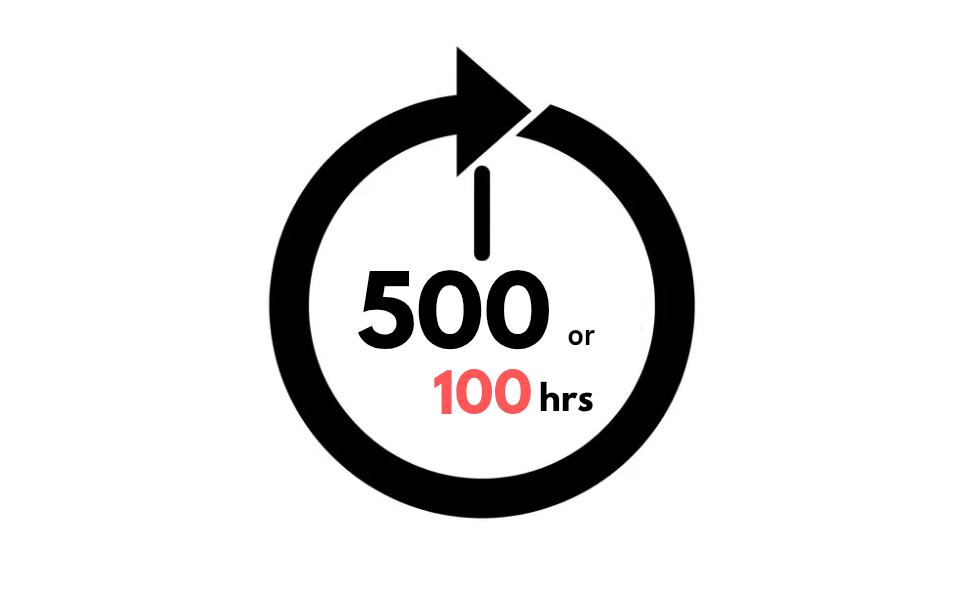
Comprehensive IRS tracking for short-term rentals. By achieving material participation status—meeting the 100-hour test or the 500-hour standard—you can unlock the STR tax loophole to convert passive rental losses into active losses that offset W-2 or active income. Easily monitor your hours and ensure your property adheres to the crucial 7-day average stay rule with detailed time logging, so you stay audit-ready and protect this key tax saving strategy.
Powerful resources to simplify investing and stay compliant.
Comprehensive rental property investment analysis with 30-year projections, break-even analysis, and ROI calculations.
Analyze Buy, Rehab, Rent, Refinance deals with cash recovery and post-refinance ROI analysis.
Determine if you qualify for Real Estate Professional status using official IRS guidelines.
Upload your REP hour tracking file and get an audit readiness score with AI-enhanced suggestions.
Generate a custom IRS-compliant hours tracking template in Excel, Google Sheets, or Notion.
Track multi-property 1031 exchanges with compliance checking and interactive timelines.
Everything you need to know about tracking your Real Estate Professional status
Built for real estate professionals
Join thousands of real estate professionals who track hours effortlessly, stay audit-ready, and protect their REP status with confidence.